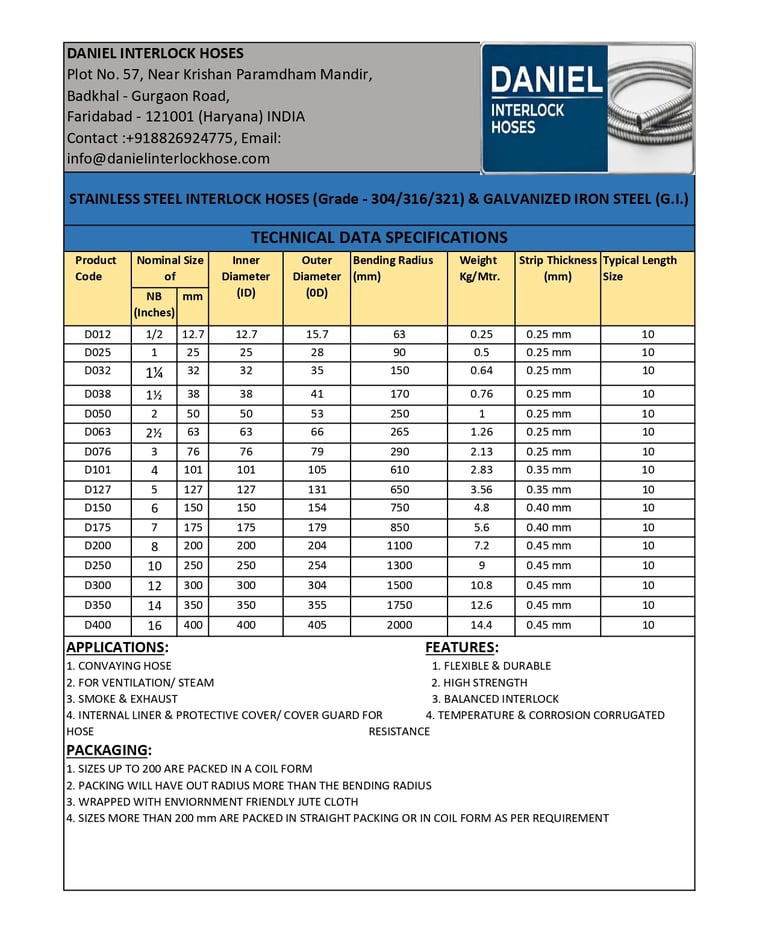
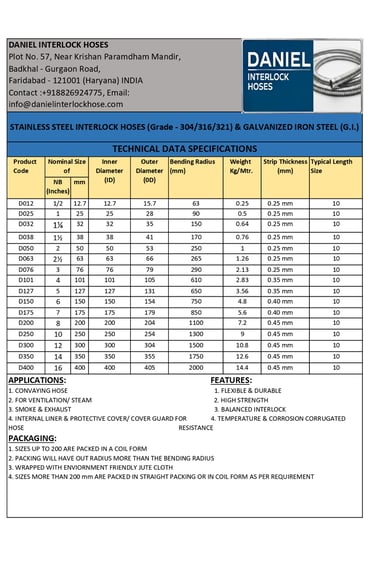
TECHNICAL SPECIFICATIONS
A Double Interlock Metallic Hose is a type of flexible metal conduit designed for applications that require strength, flexibility, and protection. It is commonly used in industrial, mechanical, automotive, and electrical systems to protect wires, convey gases, or handle low-pressure exhaust or ventilation.
What Is a Double Interlock Metallic Hose?
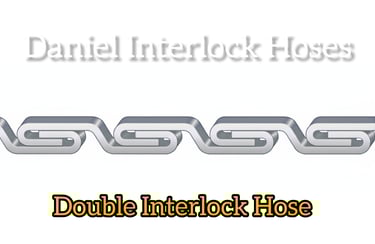
A double interlock metallic hose is built using interlocking metal strips formed into a flexible corrugated hose. It has two interlocking layers instead of one, which improves durability and prevents the hose from pulling apart under tension.
Key Characteristics
1. Double-Layer Interlock Construction
Made by tightly interlocking two layers of metal (often galvanized steel, stainless steel, or aluminum).
Provides excellent mechanical strength compared with single-interlock designs.
Prevents unraveling even under repeated bending.
2. High Flexibility
The dual interlock structure allows the hose to bend easily while maintaining structural integrity.
Suitable for routing in tight or curved spaces.
3. Crush and Abrasion Resistance
More resistant to external damage due to the double-wall structure.
Ideal for environments with vibration, abrasion, or mechanical stress.
4. Good Temperature and Corrosion Resistance
Depending on the metal used, the hose can handle high temperatures and corrosive environments.
Common in furnaces, exhaust systems, and chemical environments.
Common Applications
Electrical cable protection in industrial machinery.
Exhaust lines for engines, blowers, or ventilation systems.
Protective casing for hydraulic or pneumatic lines.
Car and motorcycle exhaust flex connectors.
Transfer of low-pressure gases or fumes.
Mechanical vibration absorption or isolation.
Advantages
Superior mechanical durability over single interlock hoses.
Can withstand twisting, pulling, and vibration.
Resistant to heat, moisture, and many chemicals.
Long service life with minimal maintenance.
Limitations
Not suitable for high-pressure fluid transfer (use corrugated metal hoses with braid instead).
Heavier and less flexible than single interlock versions.

DANIEL INTERLOCK HOSES
Plot no. 57, badkhal - gurugaon road, near krishan paramdham mandir, faridabad - 121001
haryana, india
gstin no. 06bwwps8636r1z0
info@danielinterlockhose.com
danielinterlockhoses@gmail.com
+91-8826924775
All rights reserved © Daniel Interlock Hoses
OUR PRODUCTS RANGE